What is the “sandwich construction” of Peak racquets?
The term “sandwich” used here does not refer to a food item, but rather to a common composite sandwich structure.
Simply put, it involves using two relatively rigid outer layers to encase a lightweight core material, forming a single, integrated unit.
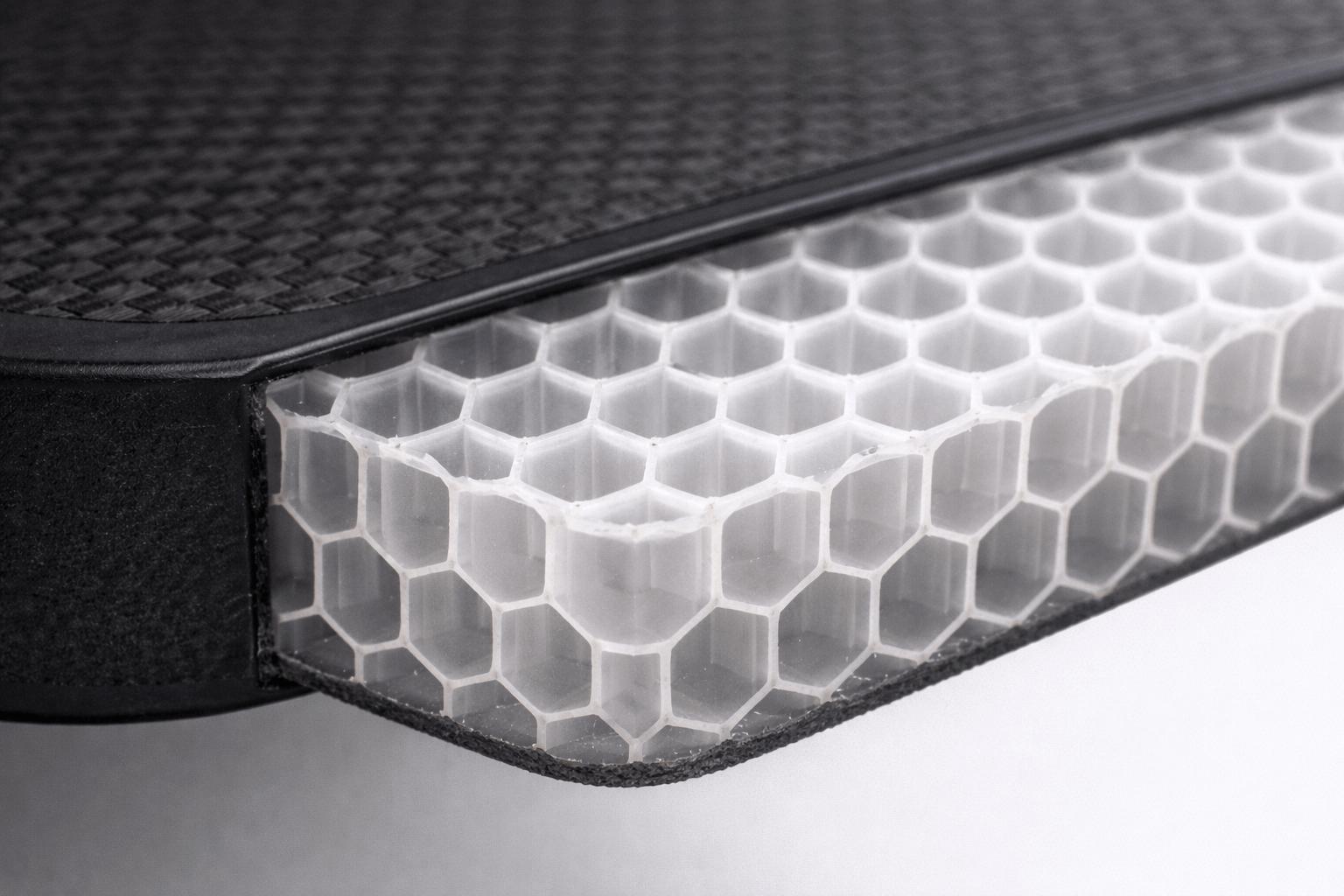
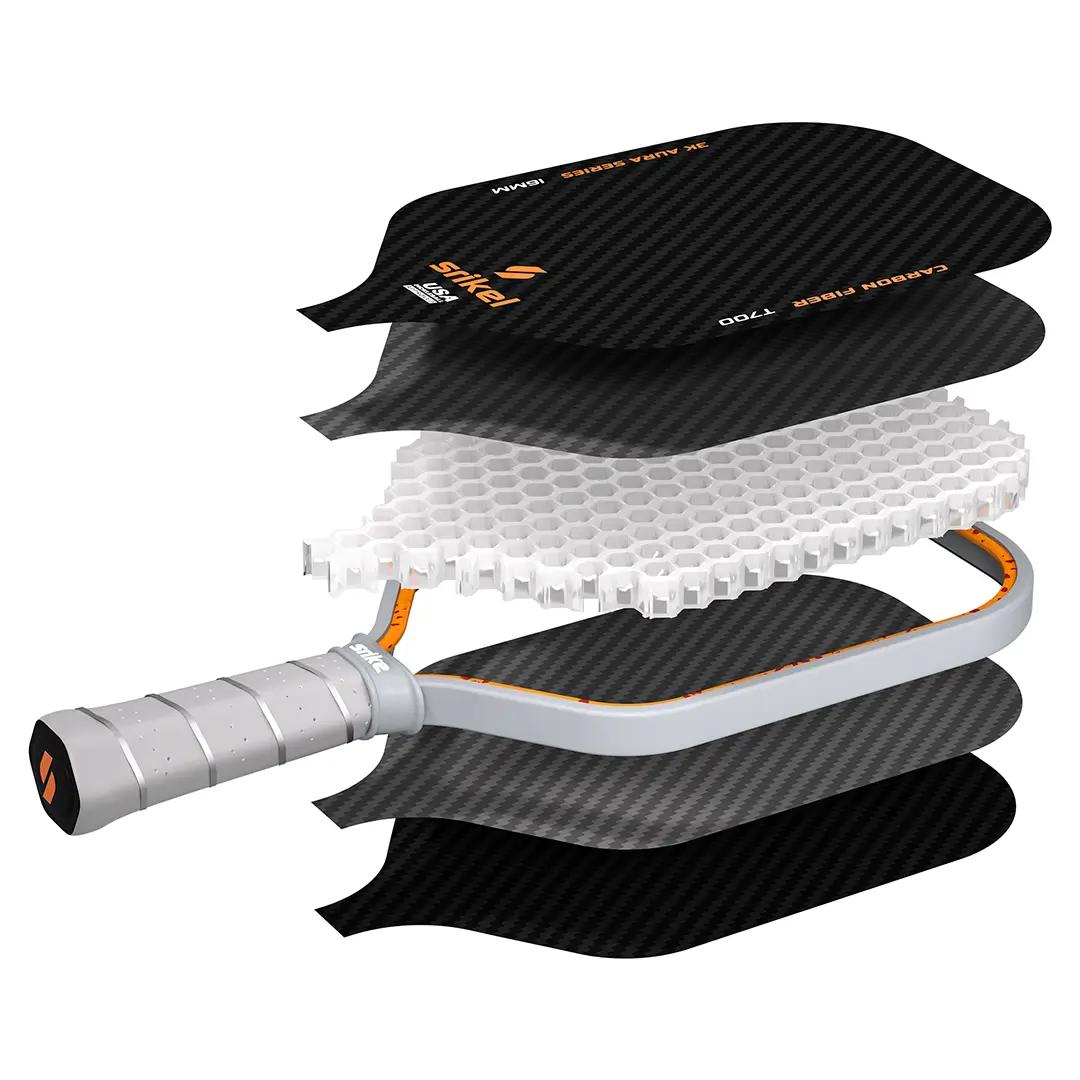
A Pick racket made with carbon fiber outer layers and a honeycomb core can typically be divided into three parts:
1. Outer layer: Carbon fiber panel
The face is the part of the racket that comes into direct contact with the ball. Carbon fiber is characterized by its light weight, high strength, and high stiffness. Through proper material design and molding processes, it helps the racket achieve the desired structural performance while keeping the weight in check.
The fiber orientation, layup pattern, resin system, and surface treatment of the face also affect the racket’s overall performance.
2. Middle Layer: Honeycomb Core Material
The honeycomb core is a key structural component inside a racquet. Common core materials include polypropylene honeycomb, though some products use other materials.
The honeycomb structure consists of numerous regularly arranged cells, providing a certain level of support while keeping the weight low. It helps maintain the racquet’s thickness and shape, and helps absorb the forces generated during a shot.
3. Bonding Layer: Binds the face panel and core material into a single unit
The face and core materials must be bonded together using appropriate adhesives, hot pressing, or other molding processes. Only when a reliable bond is formed between the layers can the laminated structure function as a unified whole.
Therefore, the performance of a racquet does not depend solely on any single material, but is closely related to the face, core, interfacial bonding, and overall structural design.
Why was carbon fiber chosen for the panel?
If the honeycomb core provides lightweight support, then the face is one of the key components that determines the structural performance of the racquet.
The advantage of carbon fiber lies in its ability to tailor structural properties through fiber orientation, fabric weave, and layup design.
For example:
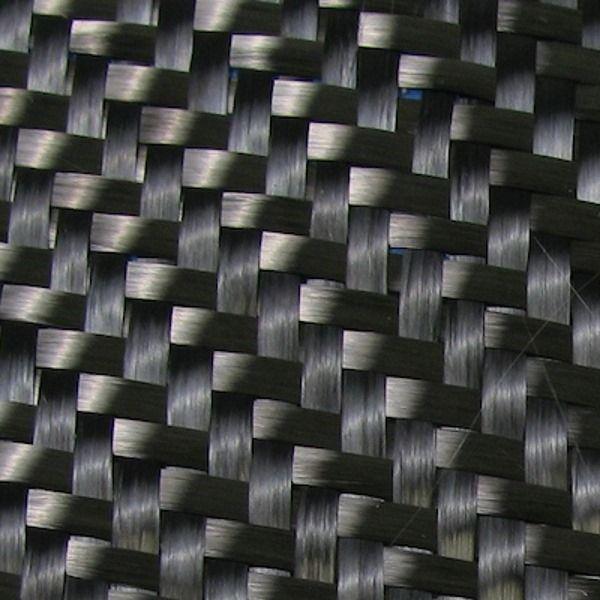
1. Plain-weave carbon fiber fabric: With a regular interlacing pattern, it can be used in various types of composite face designs.
2. Twill carbon fiber fabric: Features a highly distinctive textured appearance and is also suitable for a variety of composite material molding requirements.
3. Carbon fiber prepreg: Carbon fibers are pre-impregnated with resin; they can be cut and layered according to design requirements, then processed into composite faceplates through corresponding molding processes.
Different fiber materials, layup angles, resin content, and molding processes result in varying structural performance.
It is important to note that carbon fiber does not necessarily guarantee a better racquet. The thickness of the face, the resin system, the surface texture, the core material compatibility, and the overall manufacturing quality all influence the final performance. Some racquets also use fiberglass or hybrid fiber faces to meet different design objectives.
A good racquet depends on how well its materials work together.
Designing a Peak racquet involves more than simply combining carbon fiber and a honeycomb core.
The face must have the appropriate strength and stiffness, the honeycomb core must provide adequate support, the interlaminar bonding must be reliable, and the overall structure must balance weight, impact resistance, and service life.
If the face and core are not properly matched, or if there are issues with the interlaminar bonding, the racket’s structural stability and durability may be compromised.
Therefore, every step—from material selection and layup design to bonding and molding—is critical.
What truly makes a difference is not just a single high-performance material, but the synergistic design of the entire composite structure.
From Carbon Fiber Raw Materials to the Performance Design of Sports Equipment
Behind every Peak racquet lies the combined effect of fiber materials, resin systems, core structures, and manufacturing processes.
As a supplier of carbon fiber composites, Zhangjiagang Weinuo Composite Materials Co., Ltd. offers products such as carbon fiber cloth, carbon fiber prepregs, and carbon fiber sheets, providing a variety of material options for sports equipment and other composite applications.
For Peak racquet manufacturers, selecting the right carbon fiber materials and designing structures based on product positioning are crucial steps in achieving a balance between lightweight construction and performance.
From a roll of carbon fiber fabric to a layer of composite panel, and finally to the finished sports equipment, the value of the materials is ultimately reflected in the product’s structure and performance.
A small Peak racquet actually holds a wealth of knowledge about composite materials.
Copyright © 2026 Zhangjiagang Weinuo Composites Co., Ltd. All rights reserved
 EN