Why do carbon fiber prepregs feel sticky to the touch?
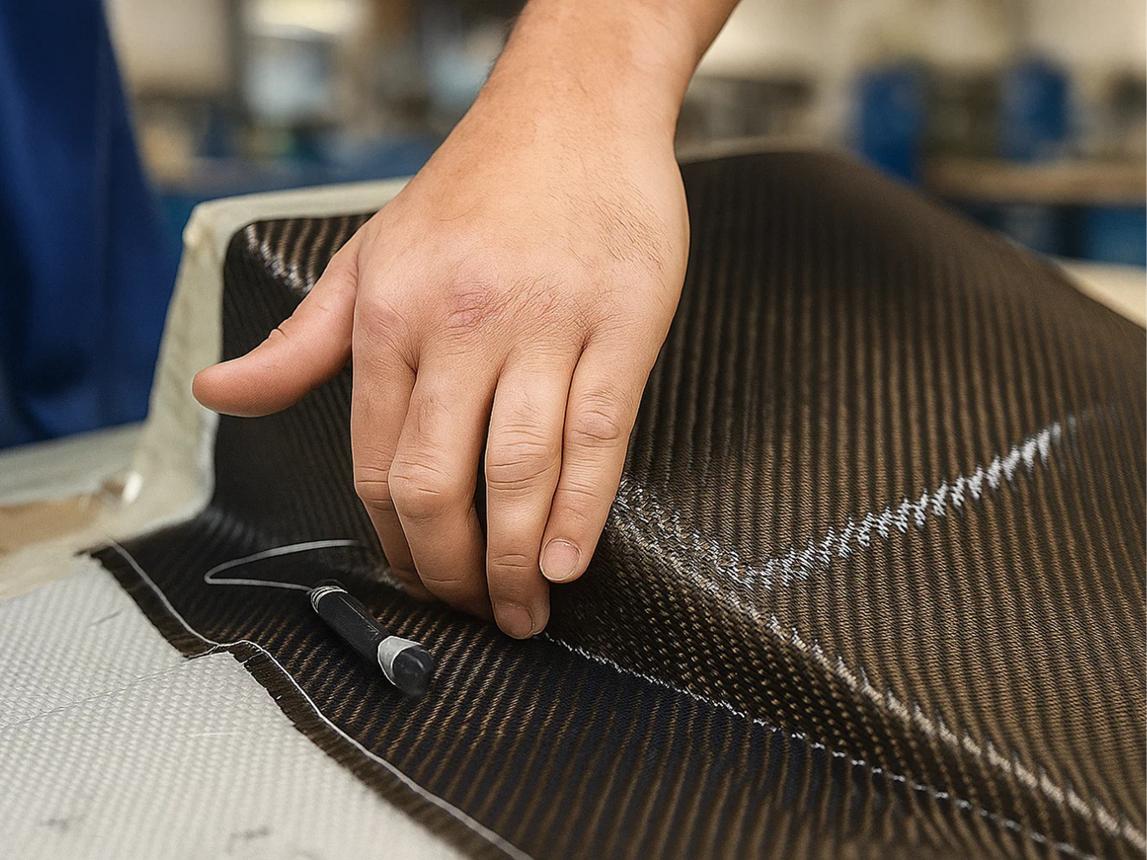
When handling carbon fiber prepregs, many people notice a distinctive characteristic: unlike ordinary carbon fiber cloth, which feels dry to the touch, the surface of prepregs has a certain degree of stickiness.
Why is that?
In fact, this stickiness isn’t a defect in the material; rather, it’s an inherent property of carbon fiber prepregs.
Carbon fiber prepreg is a semi-finished material in which carbon fibers are pre-bonded with a resin system.
During the manufacturing process, the carbon fibers are impregnated with resin, ensuring the resin is evenly distributed among the fibers. The resin used at this stage is typically not yet fully cured, which is why the material’s surface feels slightly sticky.
Simply put, prepreg feels sticky because the resin within it has not yet fully cured.
Where exactly does the viscosity of the prepreg come from?
To understand the tackiness of prepregs, one must first understand their two core components:
Carbon Fiber: Provides Strength and Stiffness
Carbon fiber is the primary reinforcing material in prepregs. It is characterized by its light weight, high strength, and good stiffness, and serves as the crucial foundation for the final composite product to withstand loads.
Resin: Binds the Fibers and Transfers Loads
Resins typically consist of thermosetting resin systems, such as epoxy resins. Not only do they impregnate the carbon fibers, but they also form a continuous resin matrix during the subsequent curing process, binding the fibers together.
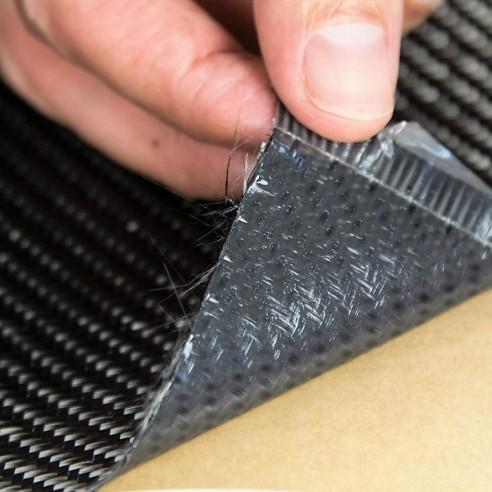
The tackiness on the surface of the prepreg primarily stems from the resin system that has not yet fully cured.
Before curing, the resin possesses a certain degree of flow and adhesion, allowing the prepreg to bond to the mold or other layup materials.
Why does prepreg need to be tacky?
You might ask: Since the resin makes the material sticky, why not make it drier?
In fact, the right amount of tack is crucial for processing prepregs.
This is primarily reflected in three aspects:
Facilitates layup and reduces material movement
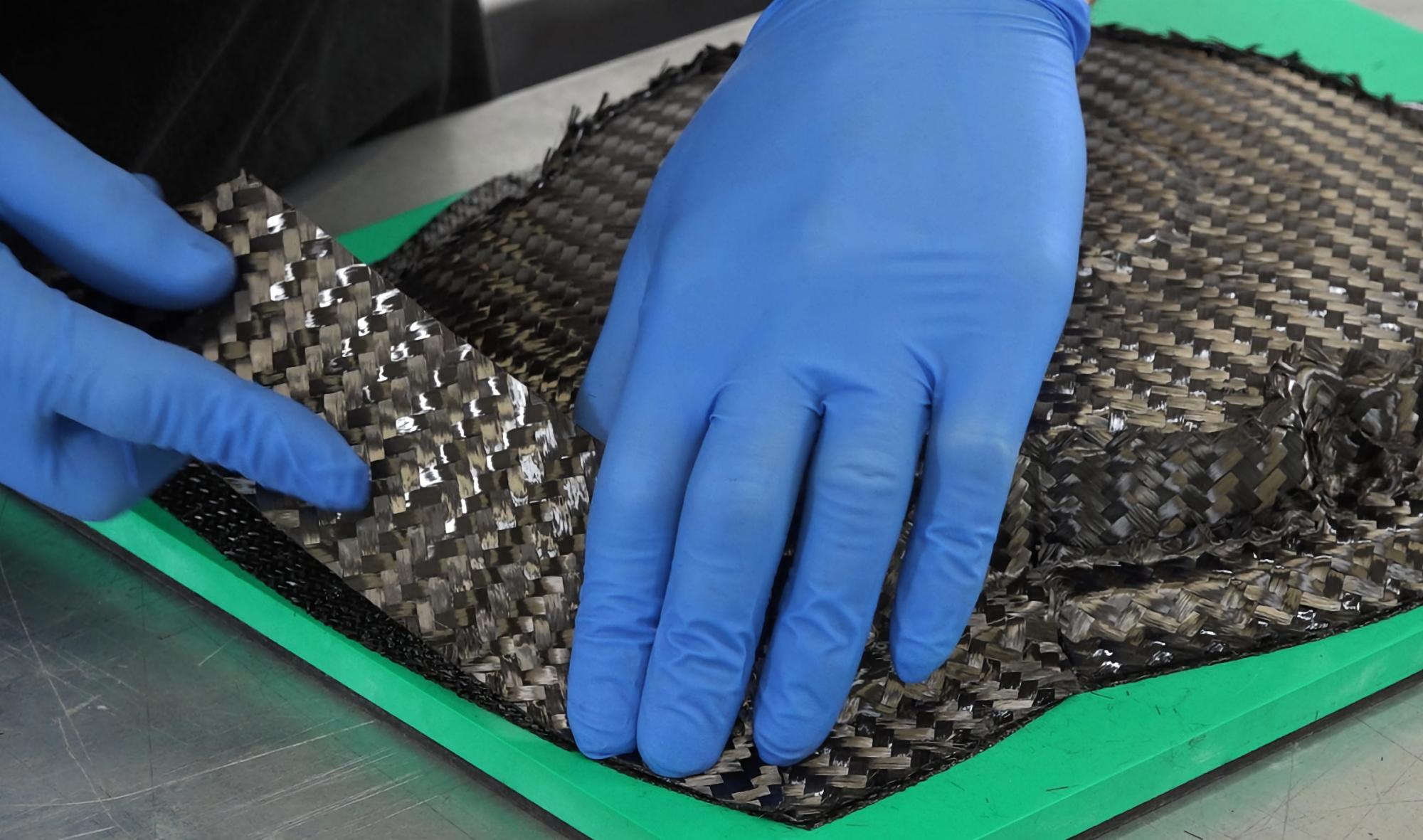
During the composite molding process, multiple layers of prepreg are typically laid up at different angles—such as 0°, 90°, +45°, and -45°—to meet design requirements.
Appropriate tack ensures better adhesion between different layers, reducing material slippage or shifting during the layup process.
Improves interlaminar adhesion
When laying up prepregs, it is essential to ensure good contact between adjacent layers. The tackiness of the resin aids in bonding the layers together, creating favorable conditions for subsequent curing and molding.
Facilitates Subsequent Composite Molding
After layering is complete, prepregs typically undergo processes such as heating and pressing to initiate the resin curing reaction, ultimately forming composite products with specific strength and stiffness.
From this perspective, tack is not only a surface characteristic of prepregs but also an important component of their processing performance.
Why do carbon fiber prepregs need to be stored at low temperatures?
Since the viscosity of prepregs is closely related to the state of the resin, storage conditions are naturally very important.
For common thermosetting epoxy resin prepregs, the resin may undergo a slow reaction even at room temperature.
If exposed to high temperatures for an extended period, this may cause the resin to react prematurely, alter its viscosity, and even shorten the material’s pot life.
Therefore, many carbon fiber prepregs must be stored at low temperatures in accordance with product specifications to slow down the resin reaction and maintain the stability of the material’s performance and processing properties.
Before use, the material must also be allowed to warm up appropriately according to technical specifications to prevent condensation from forming on its surface.
A Little Stickiness Holds the Secret to Prepreg Materials
The tackiness of carbon fiber prepregs may seem like a simple surface phenomenon, but it actually involves multiple factors, including resin formulation, material structure, processing techniques, and storage conditions.
Appropriate tackiness helps ensure proper layering and bonding of the material, while the subsequent curing process allows the carbon fiber and resin to form a composite structure with stable performance.
From a roll of prepreg to the final high-performance composite product, every detail relies on an understanding and control of the material’s properties.
Zhangjiagang Weinuo Composite Materials Co., Ltd. specializes in the field of carbon fiber composites, offering products such as carbon fiber cloth, carbon fiber prepregs, multi-axial fabrics, and carbon fiber sheets. We provide customized specifications and material solutions tailored to customer needs.
Please feel free to contact us to discuss carbon fiber material solutions suitable for your products!
Copyright © 2026 Zhangjiagang Weinuo Composites Co., Ltd. All rights reserved
 EN