What is the resin content of carbon fiber prepregs?
Carbon fiber prepreg is a semi-finished material formed by combining carbon fibers with a resin matrix in a specific ratio.
The resin content typically refers to the percentage of the resin’s mass relative to the total mass of the prepreg.
The calculation formula is:
Resin content = Mass of resin ÷ Total mass of prepreg × 100%
For example, if a roll of carbon fiber prepreg has a total mass of 100 kg and the mass of resin is 35 kg, then its resin content is 35%.
This means that the remaining 65 kg consists primarily of carbon fiber.
It is important to note that resin content and fiber volume fraction are not the same concept.
Resin content is typically expressed as a mass percentage, whereas fiber volume content reflects the proportion of carbon fiber in the total volume of the composite material.
Because carbon fiber and resin have different densities, the two cannot be simply converted using the same percentage.
However, when other conditions are similar, a lower resin content generally indicates a higher proportion of carbon fiber in the prepreg.
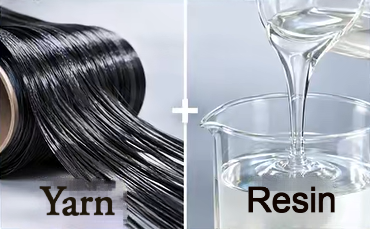
Resin Content: How Does It Affect the Performance of the Final Product?
(1) Mechanical Properties: Strength is not simply a matter of “the higher, the better.”
Carbon fibers possess excellent tensile strength and stiffness and serve as the primary load-bearing component in composite materials.
The resin, on the other hand, is responsible for bonding the fibers together and transferring loads between them.
When the resin content is too high, the proportion of resin in the composite increases, and the fiber volume fraction may decrease.
All other conditions being equal, this may lead to a decline in the material’s tensile properties, stiffness, and specific performance.
Conversely, when the resin content is too low, the resin may fail to fully impregnate and encapsulate the carbon fibers, resulting in insufficient bonding between fibers and consequently affecting the interlaminar shear strength.
When subjected to external forces, the material may be more prone to issues such as delamination and matrix cracking.
Therefore, the resin content must strike a balance between the load-bearing capacity of the fibers and the bonding strength of the matrix.
Only with the appropriate resin content can carbon fibers truly demonstrate their performance advantages.
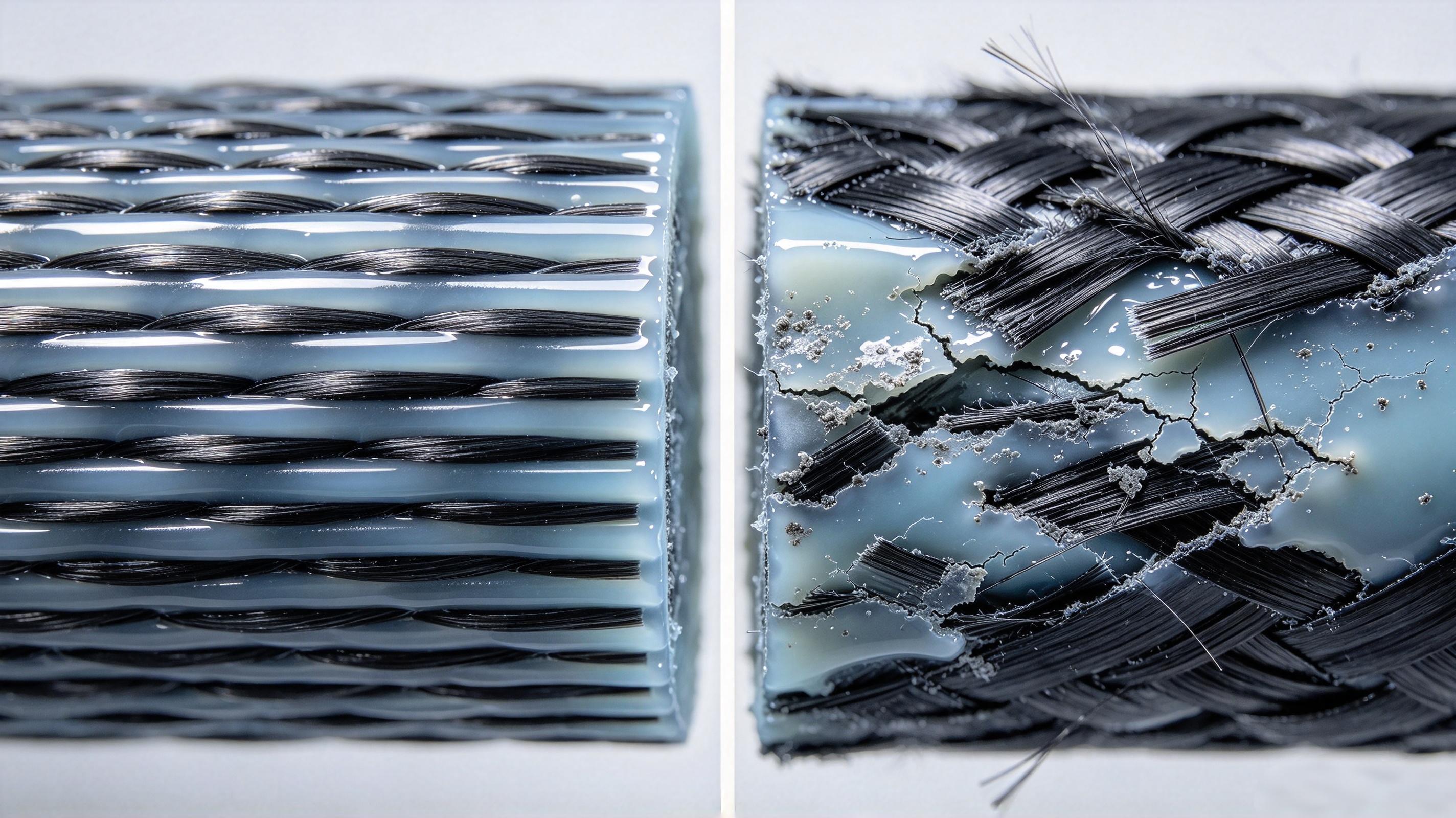
2. Impact on Final Product Weight: Weight reduction is not merely about reducing resin content.
For products such as drones, automotive parts, and sports equipment, weight is often a critical design parameter.
Under the same fiber areal density, number of plies, and molding conditions, prepregs with higher resin content typically result in a higher resin mass and may form a thicker cured layer.
This means that when meeting the same structural requirements, resin content affects the final product’s weight and thickness.
However, it is important to note:
Lower resin content does not necessarily mean the product will be lighter or stronger.
If there is insufficient resin, the material may develop voids, delamination, or other molding defects, which can actually compromise the product’s performance. Truly effective weight reduction involves reasonably controlling material composition and structural design while meeting strength, stiffness, and service life requirements.
3. Factors Affecting Molding Results: Resin Flowability and Wetting Ability
During the layup and curing processes of carbon fiber prepregs, the resin flows in response to temperature changes.
The resin content affects the material’s viscosity, flow behavior, and resin bleed during the molding process.
When the resin content is too low:
1. Fiber wetting may be insufficient;
2. Interlaminar bonding becomes more difficult;
3. Poor adhesion is more likely to occur during layup;
4. Higher requirements for vacuum compaction and process control.
When the resin content is too high:
1. The material may exhibit better layup tack;
2. Resin flow may increase;
3. Excess resin is more likely to occur during curing;
If resin flow is not properly controlled, it may result in localized resin deficiency or uneven resin distribution.
Therefore, resin content affects not only the material itself but also the subsequent layup, compaction, and curing processes.
4. Impact on interlaminar bonding: Resin serves as a critical bridge connecting fiber layers.
For products such as carbon fiber panels and structural components, interlaminar bonding performance is particularly important.
In multi-layer laminate structures, the resin must fully wet adjacent fiber layers and form a stable matrix structure after curing.
When the resin content is insufficient, inadequate interlaminar bonding may occur.
Conversely, an excessively high resin content may create thick, resin-rich areas, causing discrepancies between the material’s local properties and the overall structural design.
Therefore, an appropriate resin content helps ensure more stable interlaminar bonding and more reliable structural performance.
Is a lower resin content always better?
The answer is: No.
Many people believe that the higher the carbon fiber content, the better the material’s performance.
But in reality, carbon fiber composites are not materials composed solely of carbon fibers.
Resin also plays an irreplaceable role.
If the resin content is too low, it may result in insufficient impregnation, increased porosity, and poor interlaminar bonding.
Conversely, an excessively high resin content may increase the material’s weight, reduce the fiber volume fraction, and adversely affect certain mechanical properties.
Therefore, requirements for resin content vary depending on the specific application.
The specific resin content must be determined comprehensively based on the fiber type, resin system, layup design, molding process, and product performance requirements.
There is no single, fixed “optimal” value that applies to all carbon fiber products.
How can resin content be properly controlled from the prepreg to the final product?
In the production of carbon fiber prepregs, resin content is not only a material parameter but also a critical quality control indicator in the manufacturing process.
In actual production, it is necessary to reasonably control the resin system, impregnation process, and material parameters in accordance with product requirements.
For customers who will use the prepregs, it is also important to ensure that the resin content of the material is consistent and that it is compatible with their own molding processes.
This is because even with the same type of carbon fiber, differences in resin content, layup orientation, and curing processes can lead to variations in the final product’s performance.
From raw materials to the final product, every step must be carefully coordinated.
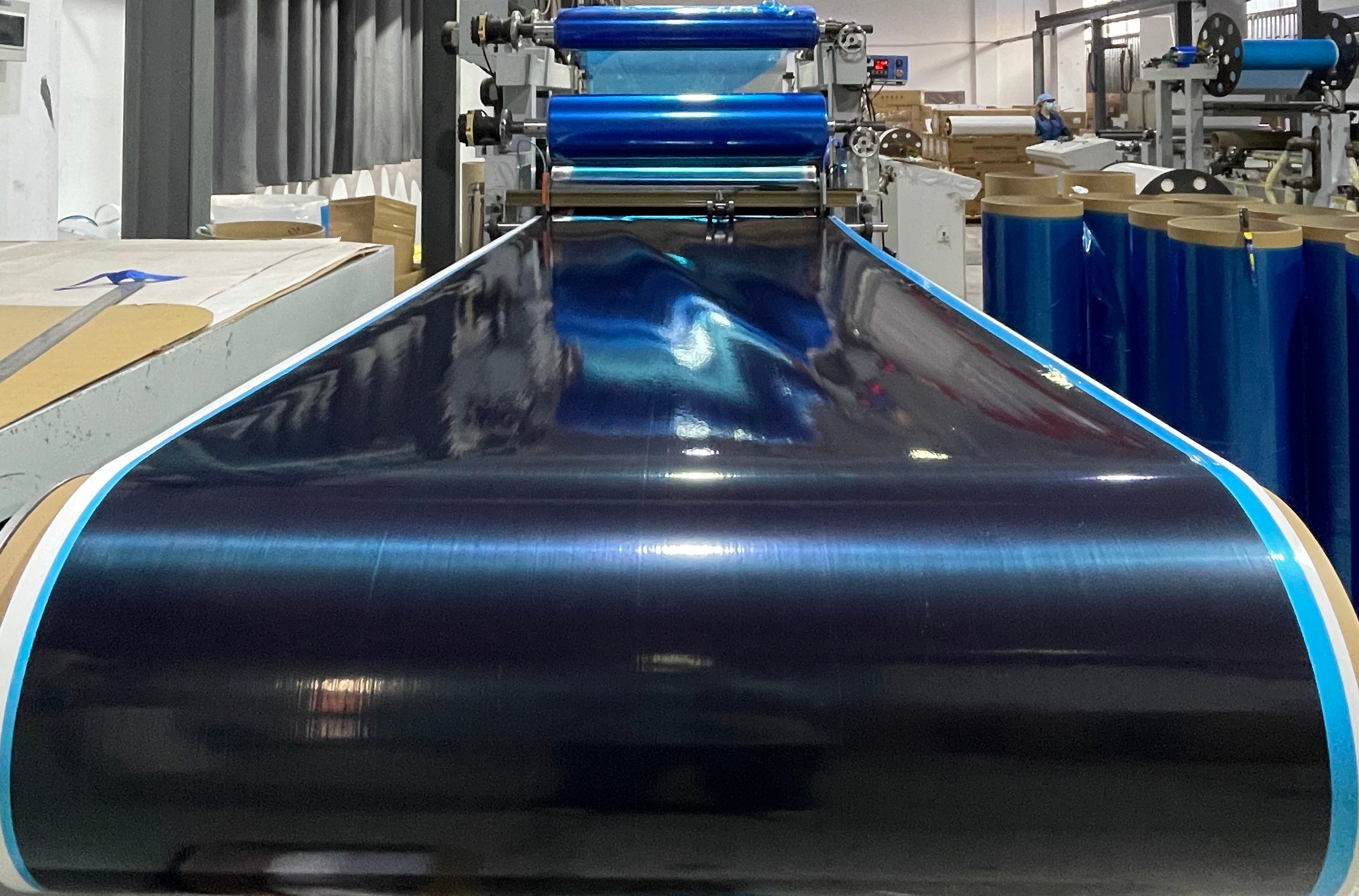
Weinuo Composites: Matching Material Properties to Product Requirements
As a manufacturer of carbon fiber composite materials, Zhangjiagang Weinuo Composite Materials Co., Ltd. maintains a constant focus on the performance and application requirements of carbon fiber materials.
From carbon fiber fabrics and unidirectional prepregs to multiaxial fabrics and carbon fiber panels, different materials possess distinct structural characteristics and application areas.
For carbon fiber prepregs, resin content is not a standalone figure.
It works in conjunction with fiber type, fabric structure, layup orientation, molding process, and the final operating environment to determine the product’s performance.
Selecting the appropriate prepreg requires considering not only resin content but also the product’s actual application requirements.
Only with the right material selection and proper process control can carbon fiber truly deliver its advantages of lightweight construction and high performance.
If you are looking for prepregs suitable for carbon fiber panels, drone structural components, sports equipment, or other composite products, please feel free to contact Weinuo Composites to discuss your product requirements.
By aligning material parameters with product design, we provide more reliable material support for your final products.
We specialize in carbon fiber composites and provide material solutions for a variety of applications.
Copyright © 2026 Zhangjiagang Weinuo Composites Co., Ltd. All rights reserved
 EN