Just how appealing is carbon fibre for weight reduction?
Lightweight design is about more than just making products lighter.
For drones, reducing structural weight helps lower the flight load, creating more scope for optimising flight endurance and payload capacity; for cars, weight reduction helps lower energy consumption whilst driving and opens up possibilities for optimising overall vehicle performance; for sports equipment, lightweight design can help improve handling and the user experience.
The advantage of carbon fibre composites lies in their low density, whilst simultaneously enabling the required strength and stiffness to be achieved through the design of fibre orientation, lay-up structures and resin systems.
Compared with traditional metallic materials, carbon fibre composites offer significant potential for weight reduction in many applications. However, the specific weight-saving effects must be assessed in conjunction with the material system, product structure, manufacturing processes and actual operating conditions.
Lightweight does not mean weak. Truly valuable weight reduction involves achieving a more rational structural design for the product whilst meeting performance requirements.
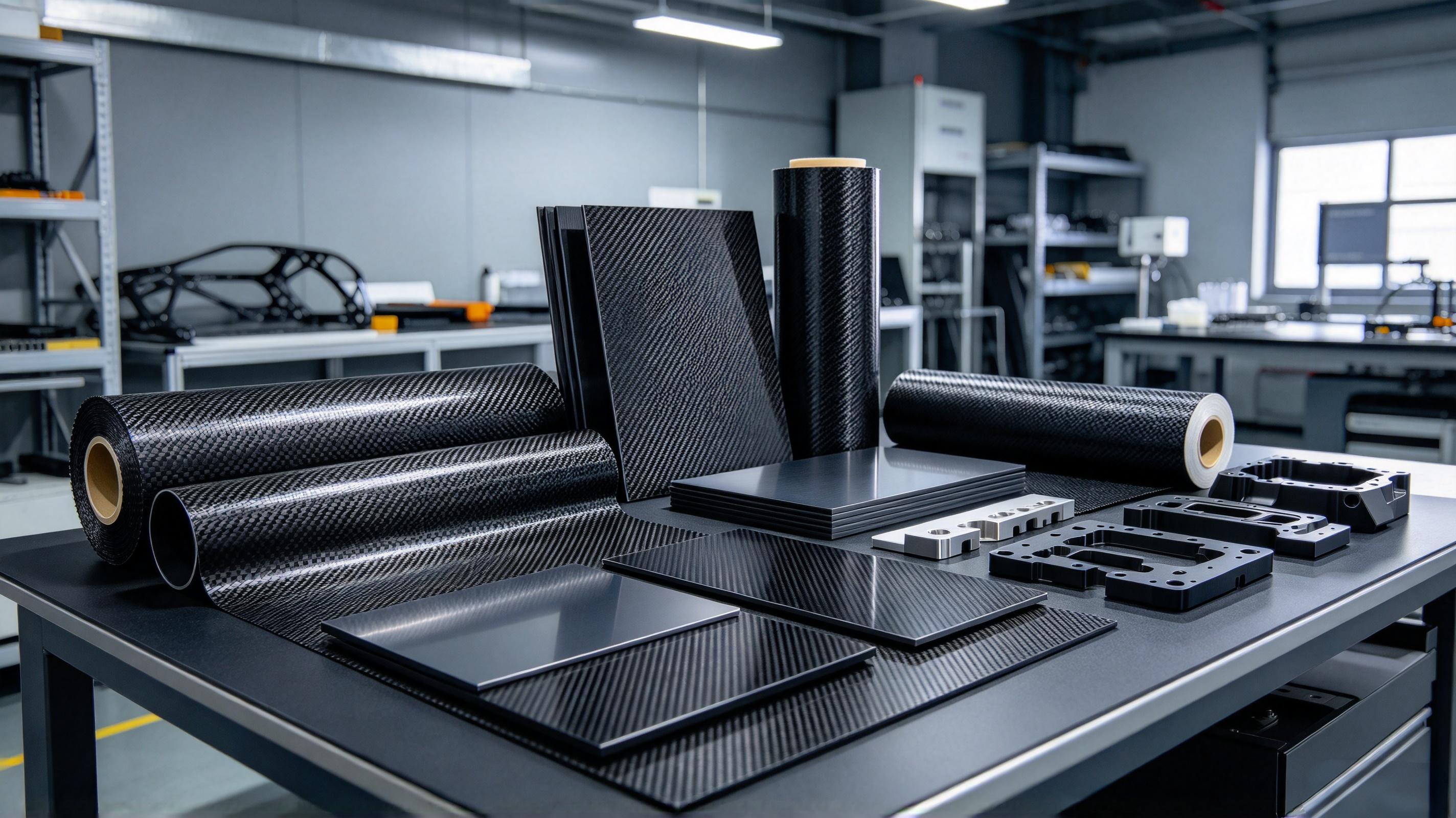
From a roll of carbon fabric to a high-performance product
The performance characteristics of carbon fibre products do not arise out of thin air.
From fibre weaving to prepreg production, and on to sheet manufacturing and precision machining, each product has its own unique manufacturing characteristics and serves a distinct application purpose.
At Weinuo, we offer a wide range of product options centred on the production and processing of carbon fibre composites to meet the material requirements of our diverse customer base.
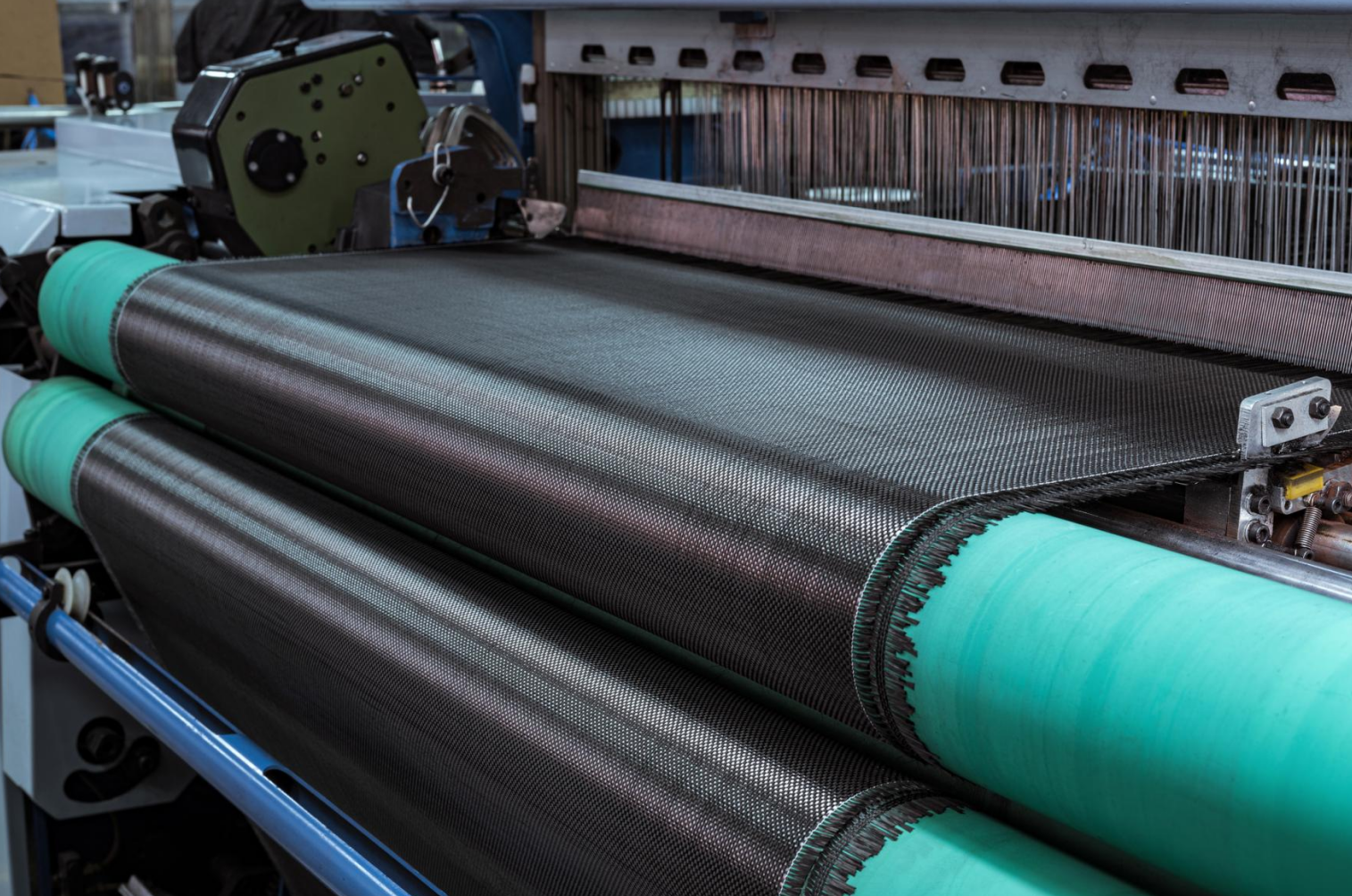
1. Carbon fibre woven fabric
[Providing a reinforcing framework for composite materials]
Individual carbon fibre filaments are woven to form carbon fibre fabrics with different weave structures.
Different weave structures—such as plain weave, twill and satin weave—each have their own distinctive characteristics in terms of appearance, fibre interlacing patterns and subsequent forming applications. Carbon fibre woven fabrics are widely used for reinforcing composite materials, providing a vital fibre-reinforced foundation for products.
From surface texture to fibre arrangement, every detail is closely linked to subsequent applications.
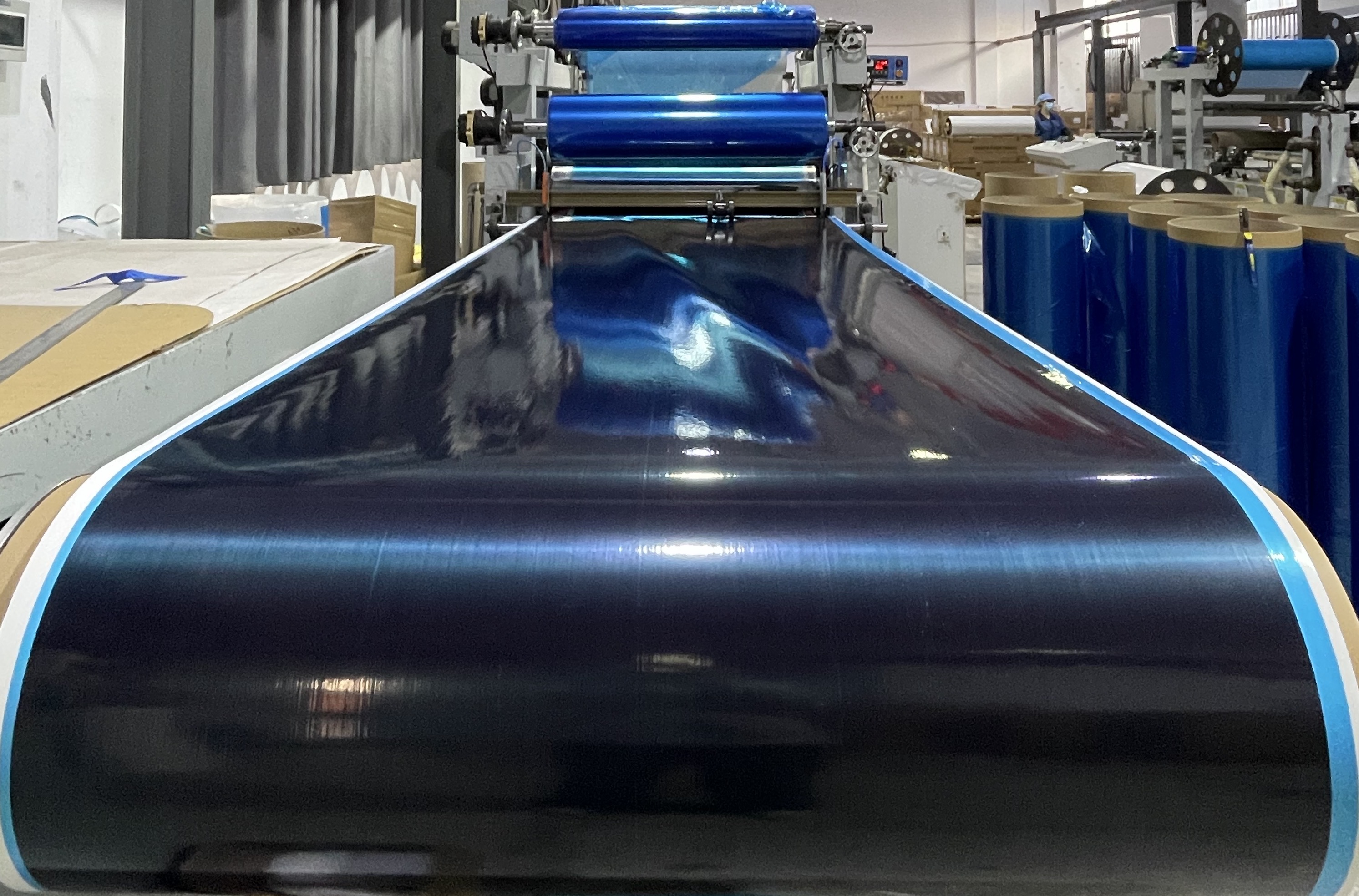
2. Carbon fibre prepregs
[Enabling fibres and resins to work in synergy]
If carbon fibre fabrics form the basis of reinforcing materials, then prepregs are a key intermediate material in the manufacture of composite materials.
Carbon fibre prepregs are produced by pre-combining carbon fibre reinforcements with a resin system, and are then processed using appropriate moulding techniques to produce the required composite products.
Factors such as fibre content, the resin system and the state of the material all influence the performance of the final product.
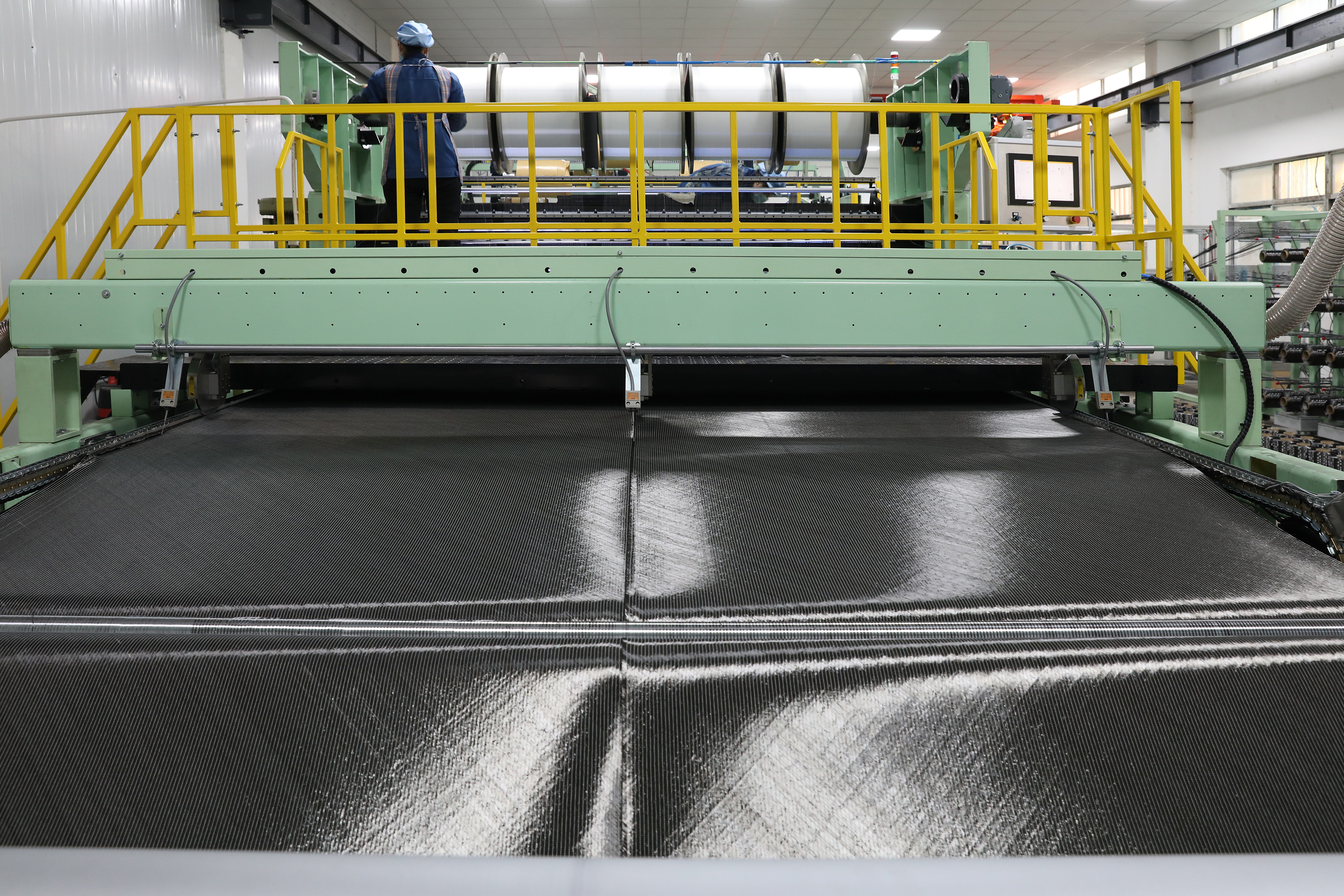
3. Multi-axial carbon fibre fabrics
[Allowing fibre to contribute in different directions]
The advantage of carbon fibre lies not only in the material itself, but also in the fact that the fibres can be oriented according to the structural load requirements.
Carbon fibre multi-axial fabrics are produced by laying multiple layers of fibres at different angles—such as 0°, 90°, +45° and -45°—and then bonding the layers together using a warp-knitting process to form a multi-directional reinforcement structure.
Compared with traditional woven fabrics, multi-axial fabrics reduce the fibre waviness caused by conventional warp-and-weft interlacing, allowing fibres to align along the designed direction via a more direct path. This facilitates the structural design of composite materials to meet varying load-bearing requirements.
In fields such as unmanned aerial vehicles (UAVs), marine vessels, wind power and industrial composites, multi-axial fabrics can be utilised in lightweight reinforced components according to specific product structural and performance requirements.
As a key product type within carbon fibre composites, multi-axial fabrics offer greater design flexibility for structures subjected to multi-directional loads.
4. Carbon fibre panels
[Balancing lightweight design with structural performance]
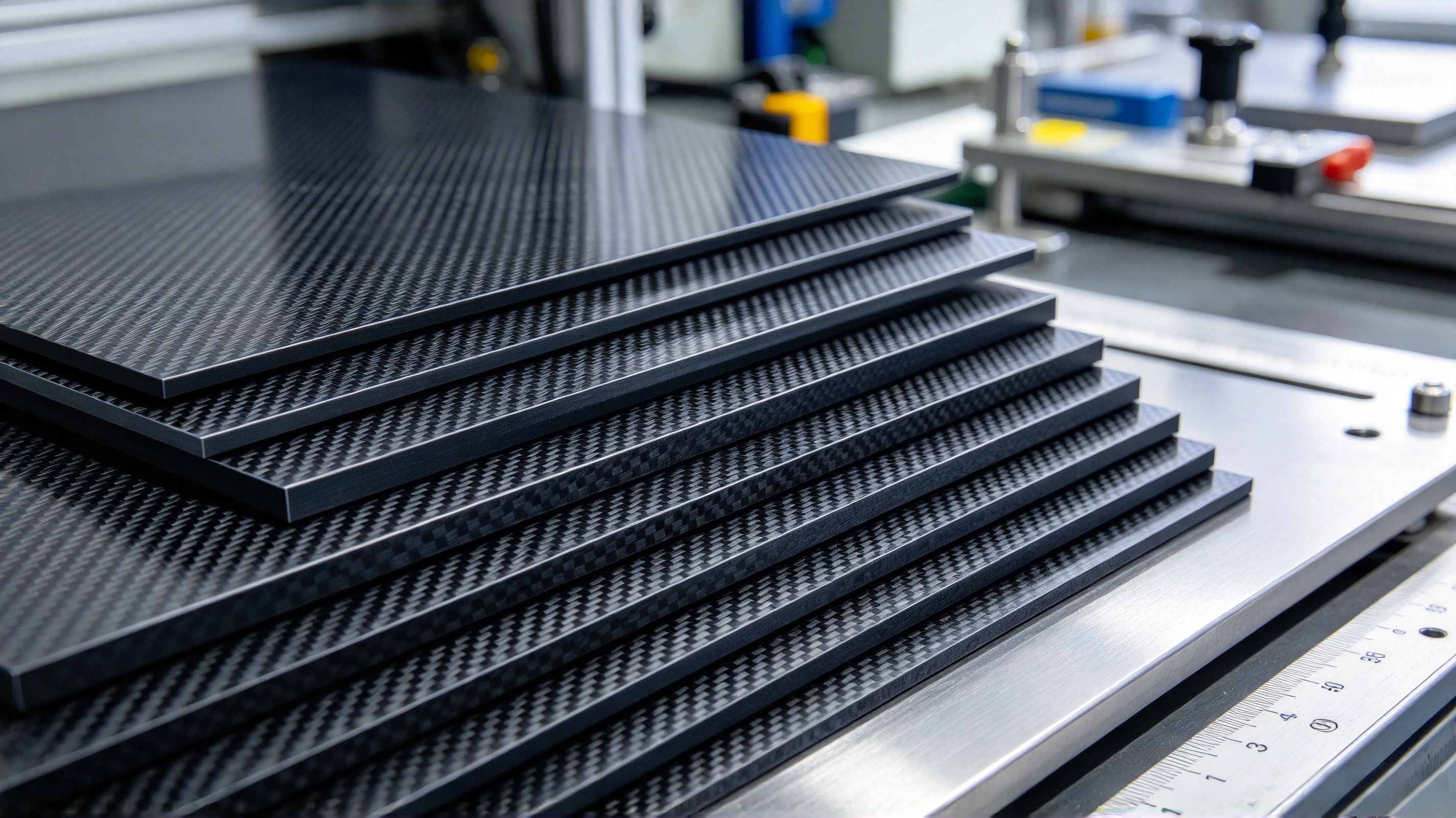
Carbon fibre panels are one of the most common product forms among carbon fibre composites.
By adjusting the fibre orientation, number of plies, resin system and moulding parameters, panels of varying thickness, stiffness and mechanical properties can be designed to meet specific application requirements.
Compared with traditional materials, carbon fibre panels offer the potential for higher specific strength and specific stiffness, giving them an advantage in applications where both weight and structural performance are critical.
From equipment panels and support structures to various lightweight components, carbon fibre panels provide greater design flexibility for products.
5. Carbon Fibre CNC-Machined Components
[Transforming Materials into Precision Components]
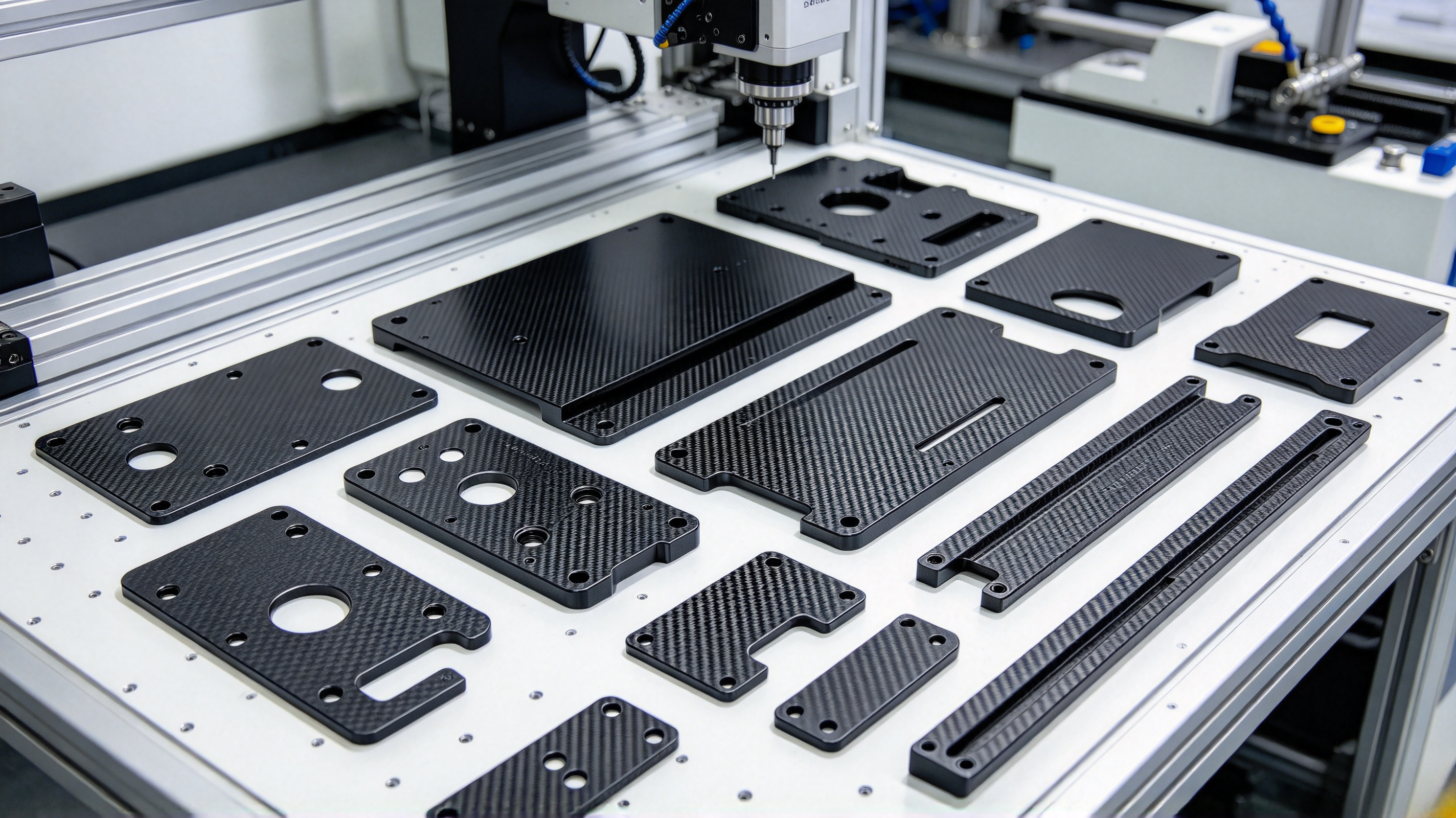
Whilst materials possess excellent performance potential, they must undergo appropriate machining processes to be transformed into products that meet design requirements.
Through CNC machining, carbon fibre sheets and other suitable composite blanks can be machined into components of various shapes, dimensions and hole patterns to meet diverse structural design requirements.
Whether it is a support component with complex hole patterns or a structural part with a specialised contour, appropriate machining parameters and process solutions must be selected based on the material’s characteristics.
From raw material to finished product, every detail influences the quality and assembly performance of the final component.
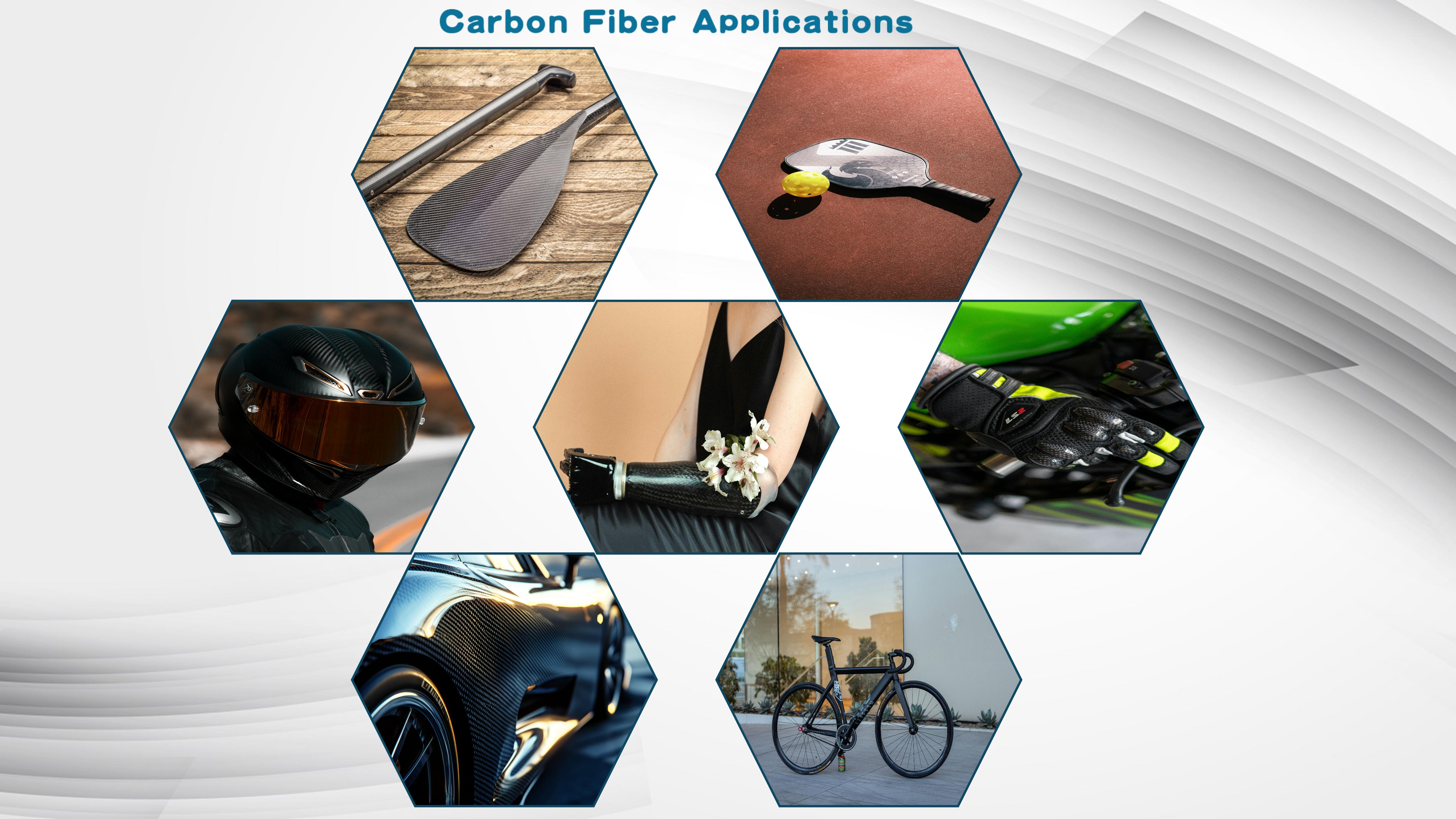
Carbon fibre, with its lightweight properties, is finding its way into an increasing number of applications
The field of unmanned aerial vehicles (UAVs)
For the airframe structure, arms and various lightweight components, suitable carbon fibre fabrics, prepregs, sheets or machined parts can be selected according to payload and structural requirements. Appropriate weight reduction helps to optimise the overall design of the aircraft.
Automotive sector
Carbon fibre composites can be used in certain structural components, body panels and functional parts. Whilst meeting safety, durability and cost requirements, they offer new material options for lightweight automotive design.
The sports equipment sector
For Peak rackets, other racket-type equipment, bicycles and other sports products, carbon fibre composites enable a balance to be struck between weight, stiffness and handling through material and structural design.
Shipbuilding and Industrial Equipment Sector
Under suitable design conditions, carbon fibre composites can be used in a wide range of load-bearing structures, equipment components and lightweight assemblies. The specific choice of material requires a comprehensive assessment of factors such as loads, environmental conditions, durability and cost.
As application requirements vary across different sectors, carbon fibre lightweighting is not simply a matter of substituting materials, but rather a systematic process encompassing everything from material selection and structural design to moulding and machining.
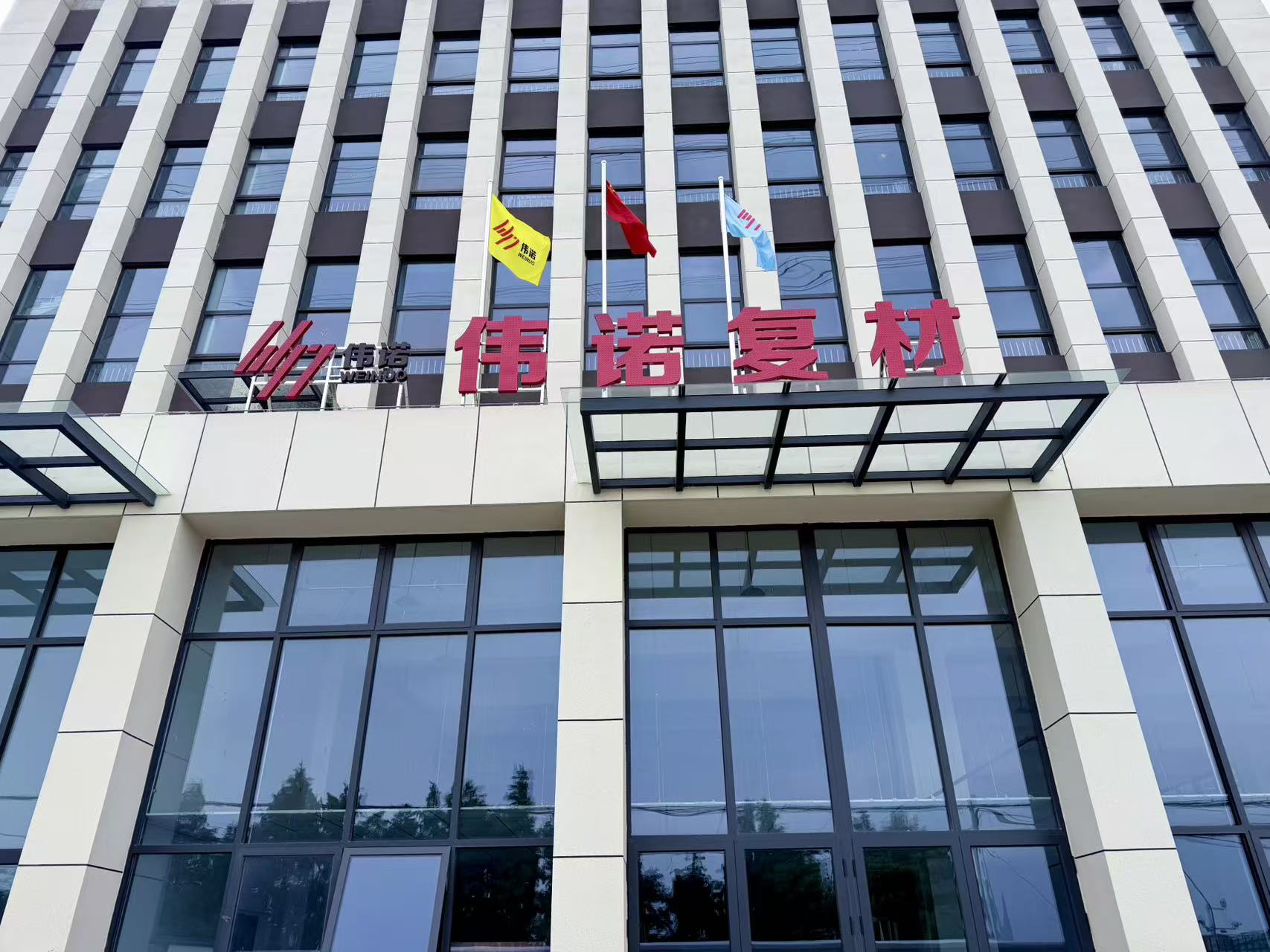
Step inside Weino and discover the manufacturing expertise behind lightweight design
Behind every high-performance carbon fibre product lies the seamless integration of raw materials, production equipment, process control and subsequent processing.
Established in 2015, Zhangjiagang Weinuo Composite Materials Co., Ltd. possesses multi-stage production capabilities ranging from fibre weaving and prepreg production to subsequent processing.
The company’s product range includes carbon fibre woven fabrics, unidirectional fabrics, prepregs, multi-axial fabrics, carbon fibre sheets and tubes, offering a diverse selection of materials for various application fields.
In terms of production facilities, Weinuo is equipped with weaving machinery, prepreg production lines, multi-axial warp-knitting equipment, hot-pressing equipment and CNC machining equipment, continuously refining its product chain from raw materials to semi-finished and finished products.
For customers, this means they can select the appropriate carbon fibre materials and processed products according to their project requirements, and further discuss material specifications, structural design and process requirements in relation to specific applications.
We believe that high-quality lightweight products require not only superior materials, but also stable production processes, sound process design and a thorough understanding of application requirements.
Copyright © 2026 Zhangjiagang Weinuo Composites Co., Ltd. All rights reserved
 EN