From Unidirectional to Multidirectional Arrangement
In conventional unidirectional carbon fiber materials, the fibers are mostly arranged parallel to one another in the same direction. This structure helps maximize the mechanical properties of the fibers in that direction; however, performance in other directions must be designed in conjunction with the specific structure.
Multiaxial fabrics, however, take a different approach: based on the product’s load-bearing requirements, carbon fibers are oriented at different angles and then bonded together through a lamination process.
Common orientation angles include 0°, 90°, +45°, and −45°.
Among these, 0° typically represents the primary design direction, 90° represents the direction perpendicular to it, while fibers oriented at ±45° help resist oblique loads and shear forces.
By combining different angles, various structures—such as biaxial, triaxial, and quadriaxial—can be formed.
It is important to note that fiber angles are not fixed; specific combinations must be designed based on the product’s structure, load characteristics, and performance requirements.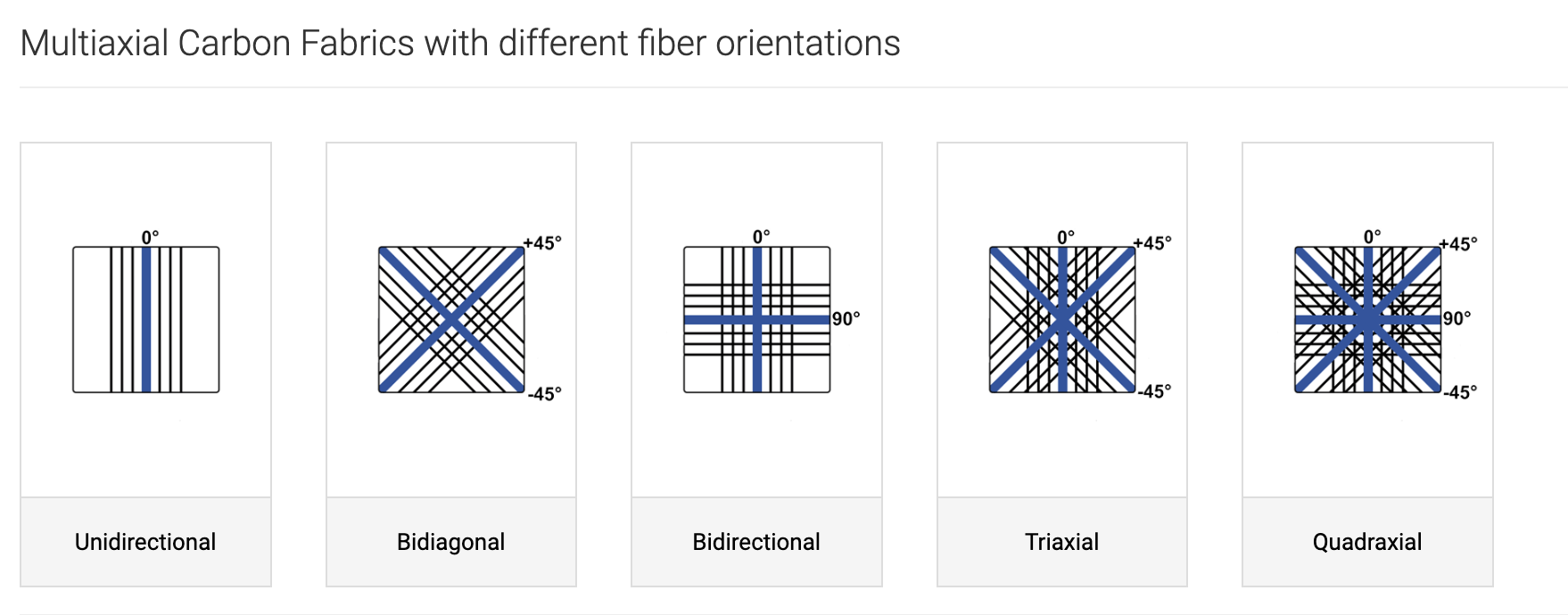
The production of multi-directional fabrics hinges on three key steps
(1) Oriented Fiber Layup
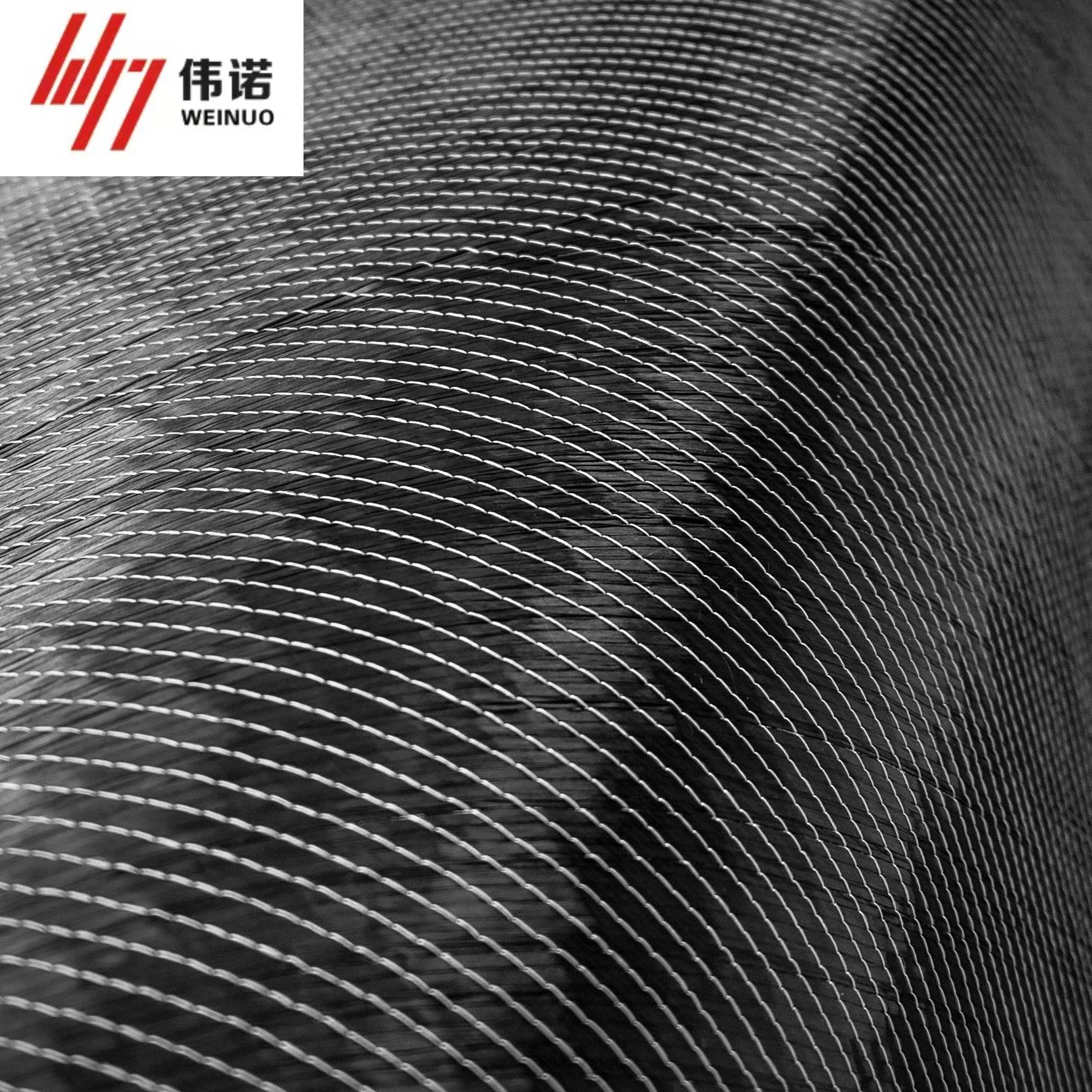
During the production process, the equipment first unfolds the carbon fibers to ensure they remain as straight and evenly arranged as possible.
Different fiber layers are laid at predetermined angles. For example, one layer may be oriented at 0°, another at 90°, and additional layers at +45° or −45° can be incorporated based on the design.
Each fiber layer has its own orientation, collectively forming the basic structure of a multi-axial fabric.
(2) Multi-layer Fiber Combination
After laying the fibers in different directions, the layers are stacked and combined according to design requirements.
By adjusting the fiber orientation, layering sequence, and number of layers, the reinforcing effect of the material in different directions can be modified.
For example, for structures requiring both longitudinal and transverse performance, a 0°/90° combination may be considered; for structures subjected to forces in multiple directions, a multi-axial design incorporating ±45° orientations may be adopted.
This means that multi-axial fabrics are not simply several layers of carbon fiber stacked together, but rather involve a purposeful design of fiber orientation based on actual requirements.
(3) Warp-knitting to Form a Stable Structure
After carbon fibers are laid in different directions, the layers must be bonded together.
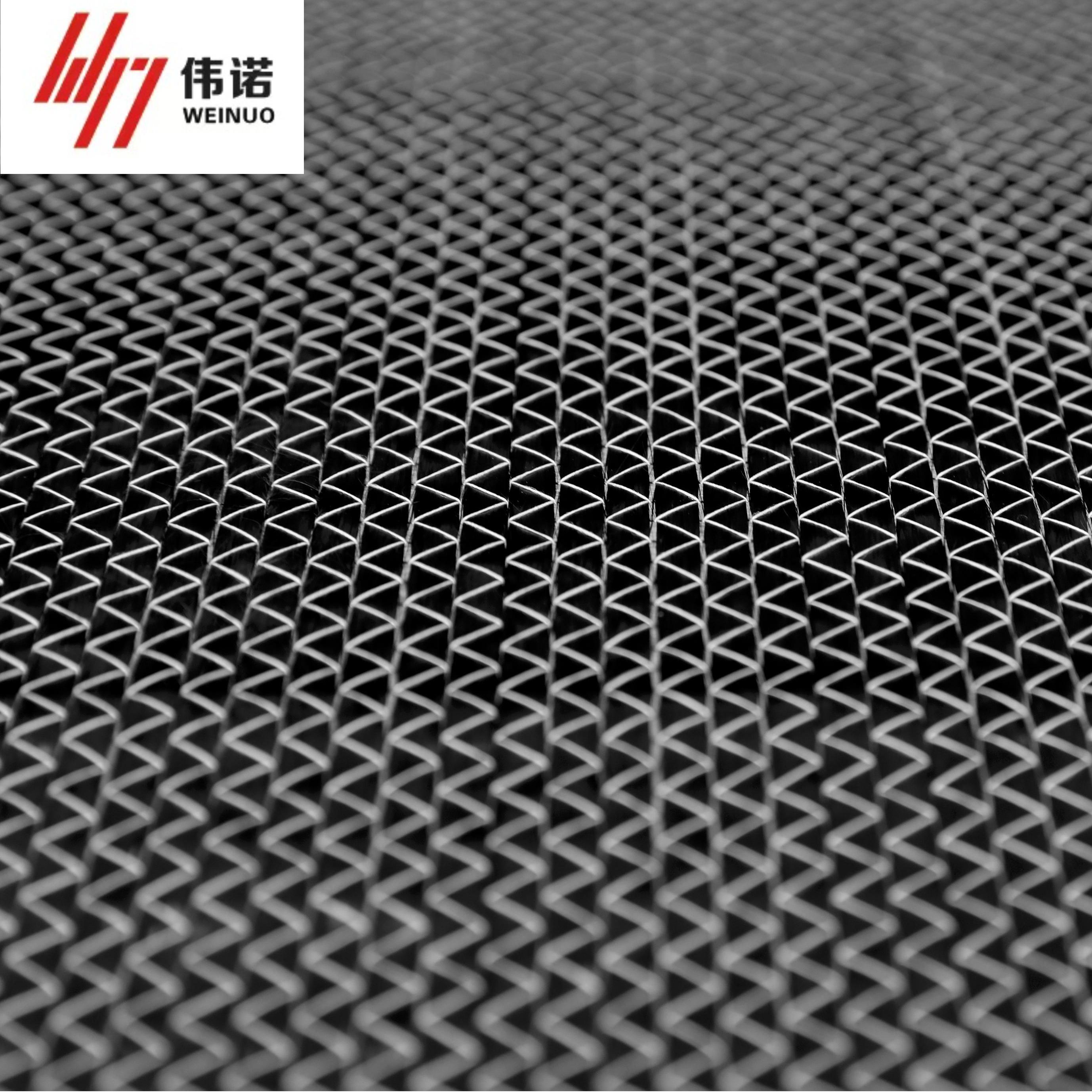
Multi-axial warp-knitted fabrics typically use a warp-knitting process, in which knitted yarns bond the fiber layers oriented in different directions together to form a stable fabric structure.
Compared to traditional weaving methods, this type of structure minimizes the bending of the reinforcing fibers caused by the interlacing of warp and weft threads, helping to maintain the fibers in a relatively straight state.
At the same time, warp-knitting helps maintain the integrity between layers, facilitating subsequent cutting, layering, and composite molding.
Ultimately, the fiber layers oriented in different directions are combined to form a multi-axial carbon fiber fabric with specific structural and performance characteristics.
Why should the fibers be oriented in different directions?
The reason is simple: the forces acting on an actual product often come from more than one direction.
Take drone structural components as an example: during flight, the structure may be subjected simultaneously to longitudinal loads, lateral loads, and vibrations. If reinforcement is considered in only one direction, it may not fully meet the design requirements of the overall structure.
By appropriately designing the fiber orientations in multi-axial fabrics, fibers in different directions can each provide the corresponding reinforcement, thereby helping designers strike a balance between strength, stiffness, and weight.
In fields such as shipbuilding, wind power, transportation, and sports equipment, multi-axial fabrics can also serve as reinforcing elements for composite materials, contributing to structural design based on specific product requirements.
Of course, fiber orientation is only one of the factors affecting final performance. Fiber type, basis weight, resin system, layup design, and molding processes also influence the actual performance of composite materials.
The advantages of multi-directional fabrics go beyond just having more fiber orientations.
The value of multi-axial fabrics lies in their ability to design the orientation of the fibers according to product requirements.
First, the design of fiber orientation is more flexible.
Combinations of different angles can accommodate varying stress characteristics.
Second, it helps maximize fiber performance.
Properly oriented layup reduces unnecessary fiber bending, allowing the reinforcing fibers to function more effectively along the intended direction.
Third, it helps improve manufacturing efficiency.
Fiber layers oriented in multiple directions can be pre-assembled into a single fabric, which reduces the workload involved in layer-by-layer placement during applicable forming processes.
Fourth, it is suitable for a wide range of composite structures.
Depending on basis weight, web width, layup direction, and number of layers, corresponding reinforcement material solutions can be provided for different products.
It is important to emphasize that a higher number of axial directions does not necessarily mean better performance. The truly appropriate structure is selected based on the product’s load conditions, weight requirements, and manufacturing process.
Ensure that every layer of fiber has a clear design direction
From unidirectional fiber orientation to multi-angle combinations, and finally to fixation through warp-knitting processes, the production of multi-axial fabrics embodies the shift in carbon fiber composite materials from material manufacturing to structural design.
While the fiber orientation, number of plies, and combination methods may seem like mere details, they significantly impact the performance of the resulting composite materials as well as production efficiency.
Zhangjiagang Weinuo Composite Materials Co., Ltd. maintains a continuous focus on the production and application of multi-axial carbon fiber fabrics. Based on the specific requirements of different products, we can assist with material selection and solution planning regarding fiber orientation, basis weight, web width, and structural configurations.
We ensure that fiber arrangements are tailored to product requirements and that material designs better serve practical applications.
If you are looking for multi-axial carbon fiber fabrics suitable for drones, marine vessels, sports equipment, or other composite structures, please feel free to contact us to discuss your specific product requirements.
Copyright © 2026 Zhangjiagang Weinuo Composites Co., Ltd. All rights reserved
 EN