The challenge with foldable screens isn't just about folding the screen
The core challenge of foldable smartphones is how to achieve a lightweight, slim design while maintaining strength and durability within a limited space.
When the phone is unfolded, its internal structure must provide stable support for the flexible display; when folded, the relevant components must withstand the stress changes caused by repeated bending.
In particular, the display backplate, support plate, and certain precision structural components must not only possess sufficient rigidity but also be as lightweight as possible.
Although traditional metal materials offer good structural performance, they have certain limitations when it comes to weight reduction and complex structural design.
This is precisely where carbon fiber composites can demonstrate their advantages.
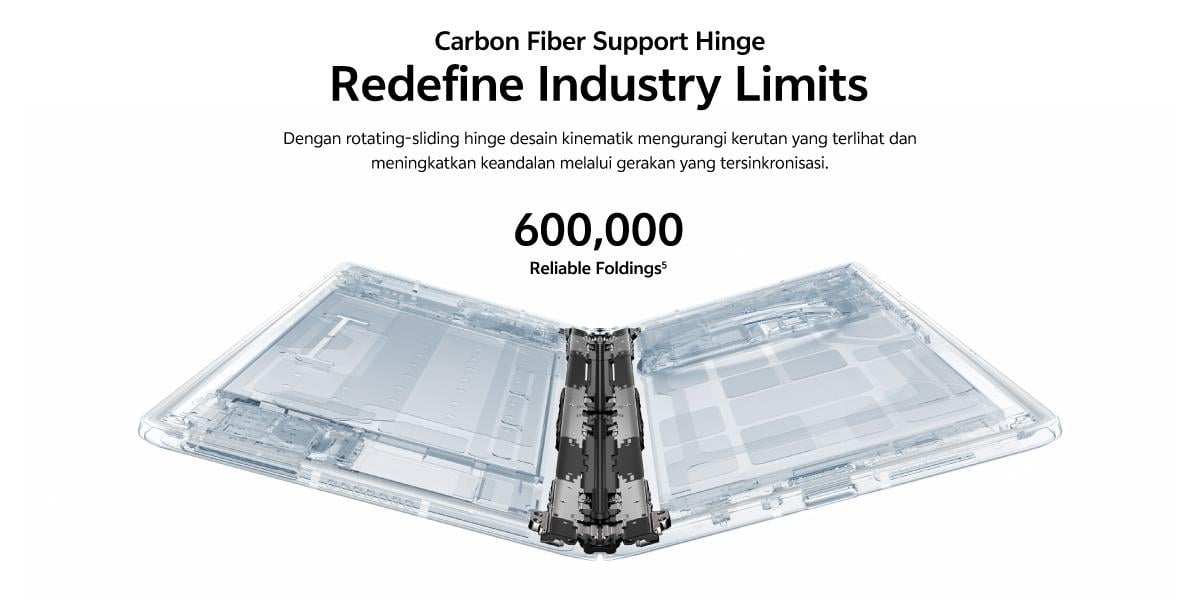
Carbon Fiber: Why Is It a Promising Material for Foldable Screens?
Carbon fiber composites are not simply carbon fiber strands strung together; rather, they combine carbon fibers with matrix materials such as resin. Through proper structural design, these materials achieve superior overall performance.
Their advantages are primarily reflected in three areas.
Lightweight:
Carbon fiber composites have a low density, which helps reduce the weight of structural components and provides more flexibility for the slim, lightweight design of foldable smartphones.
High Stiffness and High Strength:
Carbon fiber possesses excellent mechanical properties. By carefully designing the fiber orientation and layup structure, the material can provide structural support in the required directions.
Flexible Structural Design:
Carbon fiber composites can be tailored to the shape, dimensions, and load-bearing requirements of specific components, making them suitable for a wide range of structural manufacturing needs.
For foldable smartphones, these characteristics mean that while ensuring structural support, manufacturers can further explore lighter, thinner, and more optimal material solutions.

Hundreds of thousands of opening and closing cycles put the entire structural system to the test.
Carbon fiber can help make foldable screens lighter and provide structural support, but it’s important to note that:
The number of opening and closing cycles of a foldable phone is not determined by a single carbon fiber strand alone.
Actual service life depends on multiple factors, including the hinge, the flexible display, the support structure, the method of material bonding, and the overall device design.
Whether carbon fiber composites are suitable for a specific component of a foldable device requires a comprehensive evaluation of factors such as bend radius, layup direction, fatigue performance, and long-term operating conditions.
Therefore, material selection cannot be based solely on strength; it must also consider how the material performs within the actual structure.
From material R&D to structural design and on to device testing, every step is critical and cannot be overlooked.
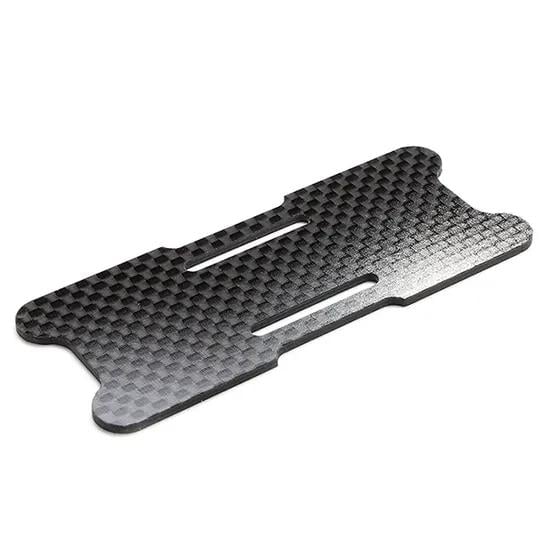
From a single carbon fiber to a high-performance composite material
A single, fine carbon fiber strand, after undergoing weaving, layering, resin impregnation, and subsequent processing, can be transformed into composite materials with diverse structures and properties.
In precision electronic products such as foldable smartphones, materials must not only meet mechanical performance requirements but also ensure dimensional accuracy, surface quality, and manufacturing stability.
This means that the application of carbon fiber materials relies not only on the inherent advantages of the material itself but also on the integration of material design and manufacturing processes.
For carbon fiber manufacturers, only by continuously optimizing fiber structure, composite processes, and product stability can they provide more reliable material options for downstream products.
About us
From aerospace to new energy vehicles, and on to drones and consumer electronics, carbon fiber composites are constantly pushing the boundaries of their applications.
The demand for lightweight, slim, and durable foldable smartphones has also opened up new avenues of exploration for high-performance composites.
A single carbon fiber may not directly determine the number of times a smartphone can be opened and closed, but it can become an indispensable component in precision structures.
As lightweight design and reliability become key objectives in product design, the value of carbon fiber is being recognized by an increasing number of industries.
Weinuo Composites specializes in carbon fiber fabrics, prepregs, and composite materials, providing material support for lightweight applications across multiple sectors.
Copyright © 2026 Zhangjiagang Weinuo Composites Co., Ltd. All rights reserved
 EN